Why do we see what we see?

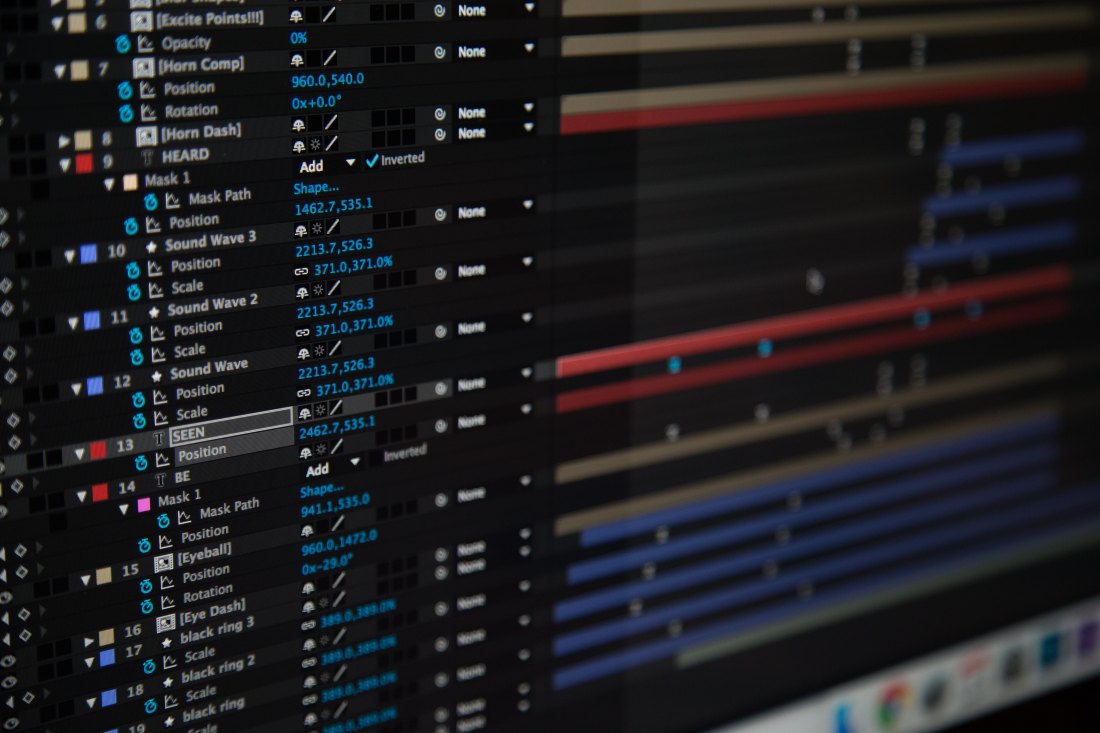
Today, more than half of America’s adults get their news from social media. Which means for millions upon millions of people, the majority of what we see, read, share and think is determined by a few lines of code carefully hidden within Facebook or another company’s walls. Will Oremus’s insightful article into Facebook’s newsfeed algorithms challenged me to ponder the increasingly important role algorithms play in our digitally evolving world.

What struck me most was how human algorithms really are. No matter how robotic and sci-fi the whole concept of algorithms may sound, they are still ultimately determined by human beings (at least until AI becomes more prominent). In short, humans determine how machines determine what humans see, at least for now. This means that the algorithms are constantly being tweaked and improved to both account for the human errors made in producing the algorithm and the change in behaviors and preferences of Facebook’s human users.

What really intrigued and surprised me was the necessity of not just quantitative, but qualitative factors used in building newsfeed algorithms. It was interesting to see the different ways Facebook grapples with building its one billion plus newsfeeds. In their attempt to make feeds personal and more human, they have to consider likes and time spent on articles, as well as non-empirical factors such as how much and why a user liked or disliked a post. The work of Adam Mosseri, described as “the news feed’s resident philosopher,” showed me that Facebook’s algorithms somehow have to account for things that cannot be statistically quantified. Facebook also faces the challenge of competition from other digital platforms like Twitter and Snapchat, who disseminate information in very different ways. The article mentioned that while Facebook’s algorithms have grown more precise in optimizing the user experience, people are enjoying Facebook less than the early days when crude algorithms or just human intuition were determining the content uses interacted with.

I am noticing Facebook’s struggles first-hand all around me. Less and less of my peers are using Facebook, preferring platforms such as Twitter and Facebook-owned Instagram. While I cannot exactly explain why, Facebook’s audience is increasingly made of older adults, while more and more young adults and teenagers are leaving their accounts inactive, and new entries into social media are less likely to join Facebook than ever. Meanwhile, it seems every other week Mark Zuckerberg is testifying to Congress that Facebook compromised the information of a concerning number of users. While this article gave me a better look at how humans are trying to make Facebook better, I still have yet to be convinced that it is a platform I should spend more of my time on. I find other networks, especially Twitter, more enjoyable and relevant, and Facebook has yet to earn back much of my time.

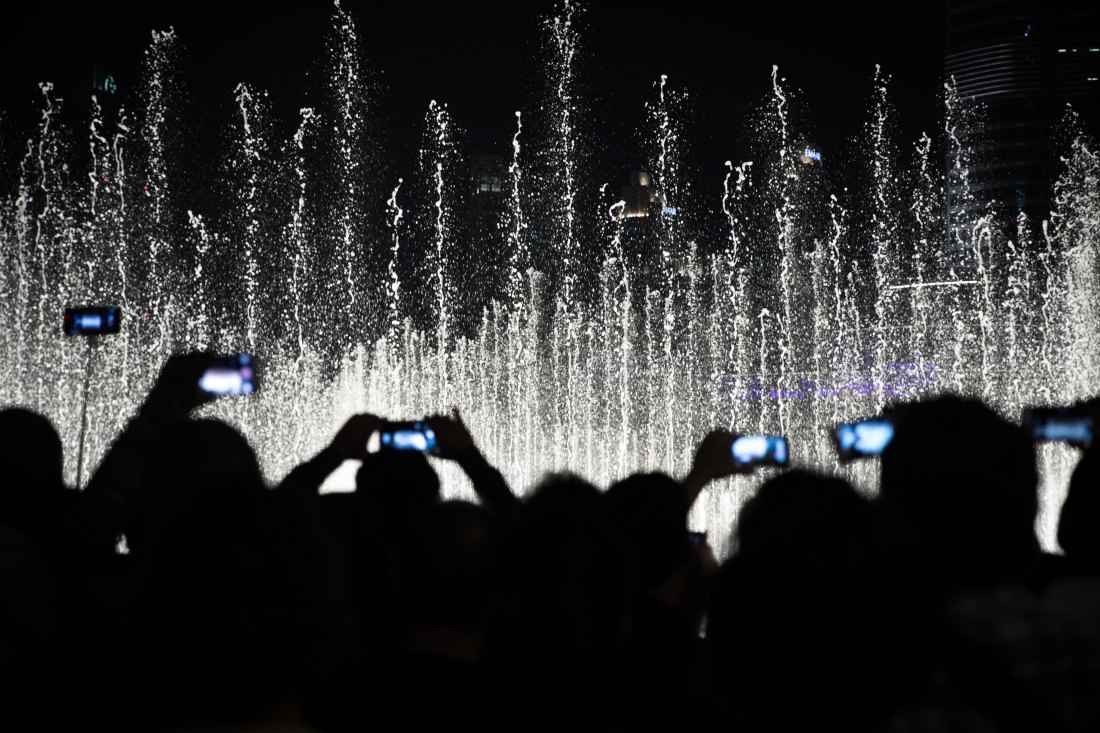
Photo by Jacob Miller (@kineticbear) on unsplash.com. URL: https://unsplash.com/photos/ot5kWZkH97s

A Day Without Technology

When planning time for four hours without technology, I thought I had a plan. I would wake up on Saturday morning, and start my time from about 8:30 onward. Saturday rolls around, I fall back asleep for two of my four hours. Sighs. Ok, I guess we’re trying this again tomorrow. I had no idea the extent of what I would learn that day. My four hours without technology Sunday morning started out great. I cleaned my room and finished my book I had been too busy to make time for as of late. I was really enjoying the feeling of not being consumed by screen time as soon as I woke up. It not only meant that I was using different methods of entertainment. I also got to take a break from email, homework and the myriad of useless notifications that fill my phone every day. Two hours in, I was enjoying this break from my over-connected world, and since have been mulling the idea of trying to have unplug time every weekend.

The first half of my screen-free session went along the lines of what I was expecting. I was enjoying my free time, and prepared to go run errands to finish out my time. I offered to drive because my roommate had driven me around yesterday, and left my phone at home. On the way to shop, I was rear ended waiting at a stoplight on 72nd Street. A young lady had rear-ended another woman who was then pushed into me. She got out of her car and said “I’m so sorry, I had GPS on my phone and looked down to see where to go,” (although, she was wearing a College of Saint Mary t-shirt, from which we were less than a mile away, so I think she was just embarrassed to say she was texting). I had to borrow my roommate’s phone to take pictures of my car and call my dad. I wrote down the names and numbers of the two other women involved on a piece of paper. After a frustrating ordeal that lasted almost two hours, we were finally on our way. My four hours without tech became much longer.

My experience without digital media came in two phases, and each brought different lessons. During my morning at home, I was reminded that taking a break from technology is very freeing. It felt good to “detox” and sit down with a book, chat with my roommate and just enjoy the morning without the constant distraction of my phone. So often in my day-to-day, I find myself wasting so much time by just getting sucked into it. It starts with responding to a text and devolves into squandered minutes scrolling around. I found that leaving my phone charging on my bedside table where it spends the night meant I was far more intentional in whatever I was doing. When I was reading my book, I just sat down and read without glancing at my phone every time it buzzed. Same with talking to my roommate. Often on weekend mornings, he plays video games and I sit and talk to him. This morning, he paused his game and we just sat and chatted for 20 or more minutes. It also allowed me to be productive and focus on things I had to do that didn’t involve a screen, such as doing the dishes and cleaning my room, which often go by the wayside when I would rather watch Netflix or do homework on my laptop. Later in the afternoon during my automotive misadventures, I received a whole different set of lessons. Throughout the process following the accident, I wished I had my phone so I could take pictures of the damage, call my parents and save the contact information for the other parties involved. Luckily my roommate was with me. It was a very real example of how technology can be extremely useful in a variety of unexpected situations. Simply having a cell phone on-hand provides a lot of guarantees against disaster. On the other hand, distracted driving with a phone is what caused the whole mess. We really do need to be mindful for when technology blurs our vision, rather than enhances it as it is supposed to.

It is safe to say my experience without digital technology was an interesting one. In my more typical morning, I already learned quite a lot about the benefits of stepping away from technology. When things got weird, I found myself in a strange situation that taught me more than I ever would have guessed. In the modern digital age, it only is growing more important for each of us to individually reckon with our technology consumption and the role it plays in our lives.

Photo by Randy Fath (@randyfath) on unsplash.com. Link: https://unsplash.com/photos/DGrQZWLw8lk

Our Attention as a Commodity

The nature of our humanity and society is that of constant improvement. In all of history, everything that has been created has been tweaked and perfected throughout the years, it’s in our nature. Technology and digital media are no exception, but today it begs the question, is technology doing its job too well? The goal of Twitter, the internet and other digital technologies have irreversibly woven themselves into modern society, and we are left to grapple with it. Douglas Rushkoff brings up the idea of FOMO, or “fear of missing out,” and how it is further aggravated by digital media. Rushkoff uses the example of the woman who spends a night on the town in New York City on her phone, sharing pictures and finding out where her friends are. On one side, we are pressured to constantly post updates on all the cool stuff we are doing, on the other, we scroll through on the receiving end of these updates, feeling like we in turn are not doing enough ourselves. It’s a vicious cycle.

Digital media perpetrates this cycle, where it sometimes can feel like people are more focused on making it appear online like they are having a good time, rather than actually enjoying the moment itself. Rushkoff uses the example of “Gina” in his book. Gina is a popular high school student who spends a Friday night on the town in New York City: “She’s at a club on the Upper East Side, but she seems oblivious to the boys and the music. Instead of engaging with those around her, she’s scrolling through text messages on her phone, from friends at other parties, bars, and clubs throughout New York.” She then moves to another party, where “…she turns her phone around, activates the camera, and proceeds to take pictures of herself and her friends – instantly uploading them to her Facebook page for the world to see.” This chapter resonated with me to an uncomfortable degree. I am all too familiar with this in college, out and about and everywhere I see people on their phones and taking pictures. Granted, I love getting pictures and there’s nothing harmless about it if done right. However, there are certain people that as soon as something funny or entertaining happens, they whip out their phone to shoot or record it to send around social media. One night sophomore year my roommate and I were getting ready for bed, when our friend came by. My roommate said something funny and she quickly took out her phone, flash and all, and began filming him, “what did you just say?” While I can definitely be a phone addict, I think I do a decent job of not trying to capture everything digitally and rather just enjoy it physically.

For free services like Facebook and Twitter, they wage a constant war for our attention in order to realize profits. They are constantly working to get us to check our phone one more time. It is not just in the casual world of entertainment. Our jobs today feel more and more connected, even beyond the office. I am currently an intern in Creighton’s marketing department, and I receive dozens of emails a day from our project management system, even when I am not in the office or when the projects no longer relate to me. While I could change the email settings, that would mean me possibly missing notification for projects I am involved in. I have not even fully entered the workforce yet, and am already feeling work’s technological reach beyond the workspace. My mom comes home from work and sits down at her computer to answer emails for several hours after she has physically left the office. Increased technology in the workplace has made it more and more difficult for us to keep work within office hours.

In our world of ever-increasing connectivity, it becomes more and more difficult to unplug in numerous facets of life. When we hit the town to relax after a stressful week, we check our phones to see what our friends are up to elsewhere. When we come home from work, we are still inundated with emails and projects that can be done online. Technology advances faster than we can determine how to best regulate it, and we as a society are still grappling with how to best balance our technology intake with the rest our lives, lest they be overtaken completely.

Photo by YIFEI CHEN (@imchenyf) on unsplash.com. Link: https://unsplash.com/photos/HGXfNxxfU-Q

An Introduction

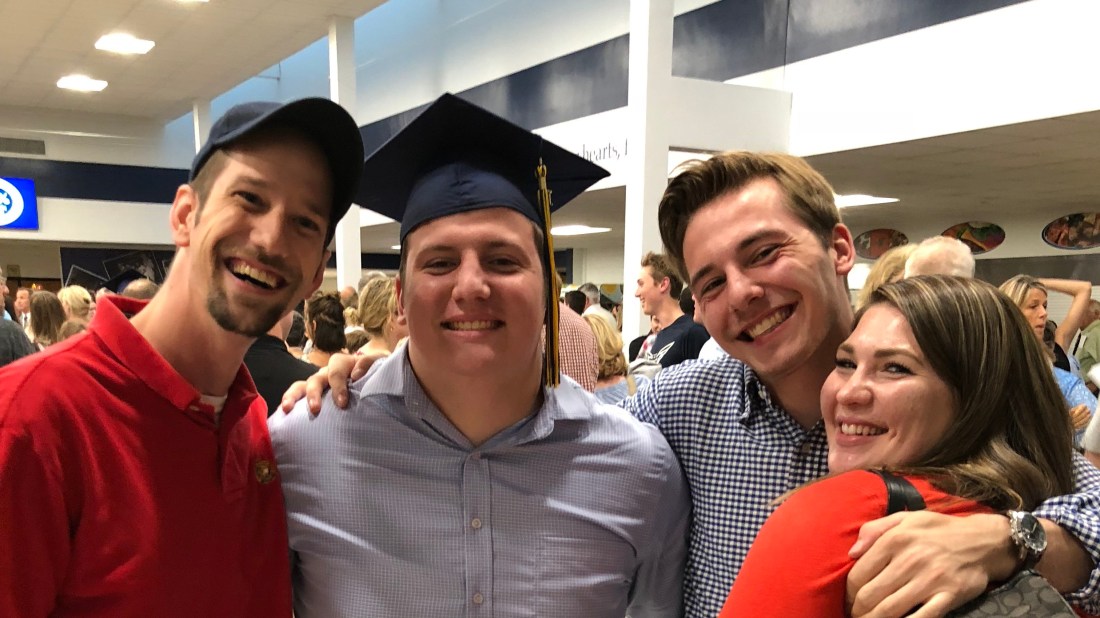
Hi! My name is Ryan King, and I am pleased to introduce myself for JRM 215: Media and Digital Literacy. I am enrolled in this class as part of the JMC department core of classes, of which I am taking five this semester! I am very excited for my schedule this fall, as I get to dive head first into the journalism curriculum after changing my major at the end of my sophomore year. I am a junior from the Twin Cities of Minnesota. Above is a picture of myself with my brothers and sister-in-law at my brother’s graduation.

I have had an extensive and casual career with media. I mean that as in I have long been a consumer of media and other digital formats (the internet, social media, television, etc) but I have not necessarily taken much time to study it. My first real experience with the study of these concepts was my sophomore year taking BIA 253, studying information systems with very introductory coding, and History of American Mass Media, where we examined American news and journalism’s evolution throughout the years and its impact on significant historical events in the United States. This semester being enrolled in courses such as Media and Digital Literacy, Social Media and Digital Foundations for the Web, I am really looking forward to acquiring more “media and digital literacy” (wink wink).

As I previously mentioned, I am a regular consumer of media. I usually read the news surfing different sites on my laptop or by following news organizations’ social media accounts on my phone. I would like to think that I read up on the news more than a lot of my fellow students, but I know there’s always a bigger fish. In high school I would watch CNN in the morning while I ate breakfast, but since moving off campus, I no longer have cable television. Now the only programs I watch are mostly Netflix and Hulu, which I can watch on my Xbox in my bedroom. I find it funny that more and more people are forgoing cable in favor of streaming apps like Netflix and Hulu, or even programs that mimic cable television such as YouTube TV and Sling. I personally think these advancements are great for consumers. When I come home, I can turn on my gaming system and have access to hundreds of shows and movies through different streaming apps. I don’t even have to play a game if I don’t want to!

That being said, I recognize such a thing as too much technology, and I have been trying to diversify how I spend my free time by doing more reading and less screen time (with mixed results, albeit). It concerns me that our world is so immersed in media, as with the good comes plenty of bad. I have seen first hand that technology has the power to weaken social interaction. Every time I see two people out to eat, both staring into their phones, or I am hanging out with friends doing the same, I wonder how things used to be before technology was so dominant. There is even a difference in how I was raised versus how children now are. I see so many parents who just give their kid the iPhone or tablet when they are being disruptive at dinner. I hate to be judgmental or act like I know anything about parenting, but that just doesn’t seem right to me. Society has a lot of reckoning to do regarding technology and media’s roles within it.

Thanks to my History of American Mass Media class, I now not only analyze the news I read, but I also think critically about the news organizations that produce it and journalism in general, now that I understand journalism’s history better. What I enjoy about the news media is how well connected and advanced they are in delivering content to consumers. Large networks like CNN have strong social media presences, well-known anchors and a broad array of content beyond just headline news. What can be frustrating, however, is how some individuals and networks have allowed themselves to become politicized beyond just delivering the news. I was a frequent watcher of CNN’s morning news, then I stopped whenever when Chris Cuomo came on. While I can’t say I disagreed with his political beliefs, it bothered me in the way he clearly expressed them, through snide comments and unprofessional rhetoric in his delivery, especially regarding Donald Trump. It makes it difficult for someone like me who just wants to receive the proper information and make a judgment for myself.

This semester, I look forward to the opportunities this course will bring, and I want to leave with a better intellectual understanding of the media I surround myself with constantly. I also hope that through said understanding, I can make my media consumption more meaningful, and less wasteful and unproductive. I’m excited for a great year!

Picture taken by me.