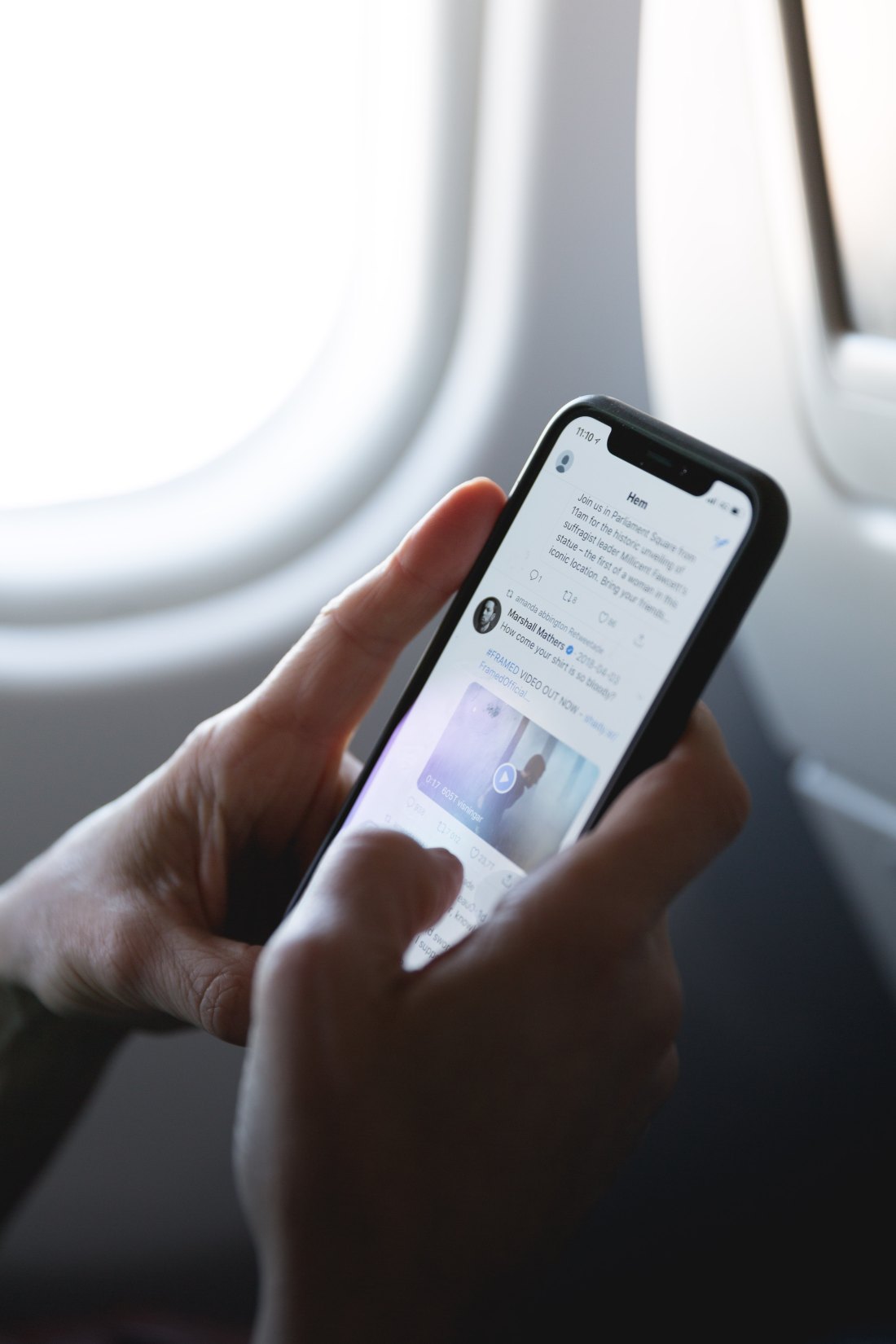
e-Friendship

Technology moves fast, and that often means that we as a society are quick to jump into the latest and greatest digital advancement without much thought for its potential repercussions and consequences. The biggest way technology has changed society is in how we interact and build relationships. We are left to consider, what happens when a relationship goes digital? In short, my philosophy is that digital connection is best when used to enhance a relationship with strong in-person chemistry and time put in, but can be problematic when online interaction is relied on too much for a relationship’s strength.

In my personal experience, technology can bring so much good to relationships at all levels. I can call my parents and family back home when I do not get to see them in person for months. I will text a friend to see what they are up to and if they want to come over or go do something. Or conversely, if I have had a bad day, a friend is never too far away. Whether I need to hear the voice of someone far away or see someone down the street, technology can help me accomplish those things. That being said, online relationships themselves are not deepening for me if they do not work to enhance my in-person communication. If I solely talk to someone over Snapchat or text, that relationship can only go so far. In high school and perhaps earlier in college I was more interested in just keeping in contact with a great volume of people, but now that I am older, I look for relationships with depth. I try to spend less time talking to people online and focusing my online communications to result in face-to-face interaction.

In Program or be Programmed, David Rushkoff explains that communication is only 7% verbal, while the other 93% comes from nonverbal cues. This means when someone texts me “I’ve had a bad day today lol,” what does that mean?? Are they being sarcastic? Is “lol” trying to not be serious while being serious? If someone tells me that in person, I can read their face and other factors to better understand what they are saying. What Rushkoff does not elaborate on is through digital communication we also lose context. In high school, I was far more anxious in my online communications. I was not mature or knowledgable enough to consider outside factors that contribute to how someone texts me or how long it takes, etc. I used to take it much more personally when I did not hear back from someone in a while or at all. Now that I am older, I have a better understanding of these contexts as well as who my good friends are. When I don’t hear back, I think, well I know they have a big test this week, or I didn’t really text them anything important, so I don’t really need to hear back soon. If a good friend doesn’t respond, I know better than to think they mean it personally or they do not like me. I didn’t always know that.

As citizens in the world and on the web, it is important for us to consider how digital we want our relationships, and that can vary from friendship to friendship. Some of my closest friends I only really communicate with when I see in person and some I stay in regular online contact with, but it is important to have somewhat of an overarching philosophy when it comes to digital friendships. Personally, I have made it my goal to shift my emphasis further and further from digital to real when it comes to my friends. Sitting on my phone messaging a friend will never replace or usurp spending real, quality, face-to-face time.

Photo from Juri Gianfrancesco (@jurigianfra) on unsplash.com. Link

A Day Without Technology

When planning time for four hours without technology, I thought I had a plan. I would wake up on Saturday morning, and start my time from about 8:30 onward. Saturday rolls around, I fall back asleep for two of my four hours. Sighs. Ok, I guess we’re trying this again tomorrow. I had no idea the extent of what I would learn that day. My four hours without technology Sunday morning started out great. I cleaned my room and finished my book I had been too busy to make time for as of late. I was really enjoying the feeling of not being consumed by screen time as soon as I woke up. It not only meant that I was using different methods of entertainment. I also got to take a break from email, homework and the myriad of useless notifications that fill my phone every day. Two hours in, I was enjoying this break from my over-connected world, and since have been mulling the idea of trying to have unplug time every weekend.

The first half of my screen-free session went along the lines of what I was expecting. I was enjoying my free time, and prepared to go run errands to finish out my time. I offered to drive because my roommate had driven me around yesterday, and left my phone at home. On the way to shop, I was rear ended waiting at a stoplight on 72nd Street. A young lady had rear-ended another woman who was then pushed into me. She got out of her car and said “I’m so sorry, I had GPS on my phone and looked down to see where to go,” (although, she was wearing a College of Saint Mary t-shirt, from which we were less than a mile away, so I think she was just embarrassed to say she was texting). I had to borrow my roommate’s phone to take pictures of my car and call my dad. I wrote down the names and numbers of the two other women involved on a piece of paper. After a frustrating ordeal that lasted almost two hours, we were finally on our way. My four hours without tech became much longer.

My experience without digital media came in two phases, and each brought different lessons. During my morning at home, I was reminded that taking a break from technology is very freeing. It felt good to “detox” and sit down with a book, chat with my roommate and just enjoy the morning without the constant distraction of my phone. So often in my day-to-day, I find myself wasting so much time by just getting sucked into it. It starts with responding to a text and devolves into squandered minutes scrolling around. I found that leaving my phone charging on my bedside table where it spends the night meant I was far more intentional in whatever I was doing. When I was reading my book, I just sat down and read without glancing at my phone every time it buzzed. Same with talking to my roommate. Often on weekend mornings, he plays video games and I sit and talk to him. This morning, he paused his game and we just sat and chatted for 20 or more minutes. It also allowed me to be productive and focus on things I had to do that didn’t involve a screen, such as doing the dishes and cleaning my room, which often go by the wayside when I would rather watch Netflix or do homework on my laptop. Later in the afternoon during my automotive misadventures, I received a whole different set of lessons. Throughout the process following the accident, I wished I had my phone so I could take pictures of the damage, call my parents and save the contact information for the other parties involved. Luckily my roommate was with me. It was a very real example of how technology can be extremely useful in a variety of unexpected situations. Simply having a cell phone on-hand provides a lot of guarantees against disaster. On the other hand, distracted driving with a phone is what caused the whole mess. We really do need to be mindful for when technology blurs our vision, rather than enhances it as it is supposed to.

It is safe to say my experience without digital technology was an interesting one. In my more typical morning, I already learned quite a lot about the benefits of stepping away from technology. When things got weird, I found myself in a strange situation that taught me more than I ever would have guessed. In the modern digital age, it only is growing more important for each of us to individually reckon with our technology consumption and the role it plays in our lives.

Photo by Randy Fath (@randyfath) on unsplash.com. Link: https://unsplash.com/photos/DGrQZWLw8lk

Everything is Permanent

In today’s world of digital interactions, there still somehow exists the illusion to some people that “deleting” something on the Internet actually deletes it. Alfred Hermida explains in “Tell Everyone” how social media and digital technology do not necessarily change the nature of our interactions, just the medium, and that these interactions are now made permanent record. We are able to exchange information and ideas to more people than we every have been able to, but the caveat is that every interaction online is meticulously archived and recorded. A person could tweet something controversial, then push the delete button a few minutes later thinking they are in the clear. In reality, that tweet exists in some form on the Internet for the rest of eternity. A more accurate name for “delete” would be “remove from timeline.” The #1 rule we teach our children for the Internet should be “just because you can’t see something doesn’t mean it’s not there.”

The Internet’s nature of permanence both gives and takes. As users, we must be extremely intentional about every form of content we place on the Internet. Every time I tweet, send an email or post on Facebook, I need to think of the repercussions. Is this content appropriate? Is it something I don’t mind others, including strangers, seeing? In 20 years will I look back and be embarrassed by this? There have been plenty of times where as a prank, friends have found my tweets from my early years on Twitter (I confess doing the same to them). There was nothing inappropriate, but definitely material that made me cringe for its awkwardness. Even though I could delete that tweet so they could not see it, that means digging through hundreds or thousands of tweets to find it. It does not take an experienced hacker to dig through and retrieve our “deleted” Internet content. More often than not, it is simply lying on our feeds, buried under years of newer posts. Take Milwaukee Brewers relief pitcher Josh Hader, whose homophobic and racist tweets from when he was 17 resurfaced on Twitter during the MLB All Star Game.

The permanence of any and all Internet interactions is not completely negative. It encourages us to put our best foot forward, and has a way of punishing the foolish or bigoted. Reading about Josh Hader’s Twitter incident, I in no way felt bad for him. While I know every 17-year-old is far from smart, he tweeted things like “KKK” and “I hate gay people.” At that age, individuals should know better than to put such brash language into circulation, permanent or not, on the Internet or in spoken word. Another way Internet permanence benefits us is by holding public figures accountable. Whenever a politician tweets, their views are on the record for the public to see. In a debate, a senator could say, “I believe in abortion rights,” and the moderator could respond, “but just nine months ago you tweeted that you were firmly pro-life.” The same goes for celebrities. When individuals monetize their fame and public persona on the Internet, the consumer has the ability and responsibility to use digital channels to see if they approve of that person’s conduct before partaking in their product. Take for example James Gunn, director of the extremely popular Guardians of the Galaxy movie franchise. Recently, he was slated to begin shooting Guardians of the Galaxy Vol. 3, when some of his old tweets surfaced from 2008 and 2009 joking about rape and pedophilia and Disney cut ties with him. While there is debate over this particular incident, it is a perfect illustration of when Internet permanence holds public figures accountable to their words, no matter the time. On one hand, as consumers of social media, we must be careful with our words and understand their impact and permanence. In return, we are able to see people’s thoughts going back as long as their Internet history, and can make judgements on public figures and peers with information we may not have had before the digital age.

Image from Marten Bjork (@martenbjork) on unsplash.com. Link: https://unsplash.com/photos/FVtG38Cjc_k

What’s Your Sentence?

Something that I have found to be an integral part of the college experience is self-discovery, figuring out who I really am. Sophomore year was a great year for self-discernment. I learned a lot more about what makes me happy, stressed, how I best interact with people, and the greatest achievement was learning more about what I wanted to do with my career, which led to me switching to a journalism major from business. Technology plays a role in how I, along with the rest of the world, define myself. Tech and media can be positive influences in our personal development, connecting us to more information about topics and ideas we already love as well as introducing new things we may latch onto ourselves. Google “motivational videos” and you will find thousands of people encouraging you to be the best person you can possibly be. Head to Reddit and find a community of people that share a similar niche interest as you. Media can bring us together in new ways, but you can also tear yourself apart with it. The most common example of this would be on social media, particularly Instagram (more for people my age) and Facebook (for more adults). There I can find countless people who seem to be having a better time and living a better life than me. This can make us feel worthless, or that our lives should be much better. We can easily forget that first, it has always been counterproductive to envy others’ lives, even long before any digital technology existed, and second, that these people put up the best snippets of their lives on social media. A beautiful, skinny Instagram model posting a picture in Hawaii could be struggling with an eating disorder. During this period of my life where I am deciding who I will become, it is important to remember that I must set my own expectations, not let others online do it for me.

Daniel Pink introduces an awesome tool for developing an identity and “personal brand.” The idea of using a single sentence to describe oneself is a really cool way to capture how I would explain myself. In order to create this sentence, I must think about what is important in my life and what do I enjoy and do best. Something that I determined several years ago to be the biggest aspect of my life is how I socialize. While I enjoy my personal time, I am wholeheartedly an extrovert, and there really is nothing more important to me than the people in my life. People and socializing is always under consideration when I try to balance my life. Am I spending enough time with the people I care about? Are these interactions meaningful and enjoyable? Another question I need to ask more is: Am I leaving enough time to accomplish other important things, or do I shelf homework and responsibilities for friends too often? What I consider to be the second of two main pillars of my identity (there are of course other factors, but let’s focus on the biggest ones) would be my desire to always be learning and improving. I thoroughly enjoy being a student, and I try to also make time for learning outside of the classroom. Especially now, I am in a period of trying to figure out how I want to spend my working years. Figuring out what I want my place to be in the world is at the forefront of my learning. I am a big proponent of the quote: “The day we stop learning is the day we die” The quote is from Irish author, not incompetent office manager, Michael Scott.

Having examined some of the things most important to me, I would say this has to be my sentence:

I am a college student, but I am a lifelong learner with a passion for the people I care about, and the drive to better myself and those around me.

I wonder how this sentence will change throughout my life!

Photo by Jan Zhukov (@sauvageisland) on unsplash.com. Url: https://unsplash.com/photos/sbbKyhxgU_A