
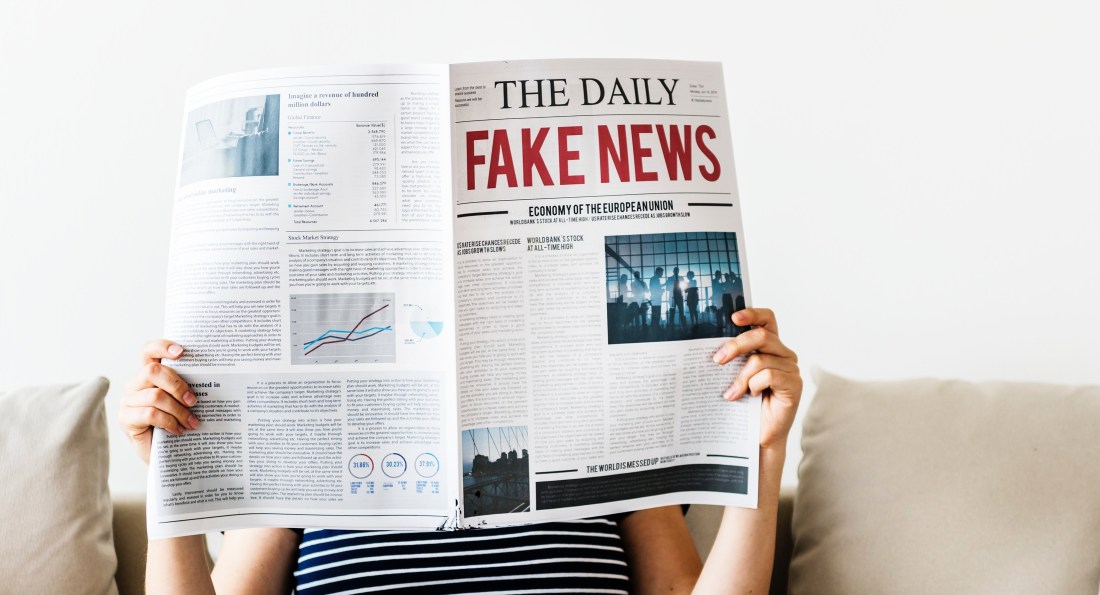
As long as humanity has existed, so have lies. People lie to each other for a variety of reasons, but that is a completely different discussion. The phenomenon of “fake news” has come into the spotlight as digital media has risen to prominence and companies such as Facebook gain enormous power and influence in modern culture. Lawmakers and regular citizens have come to realize that Facebook is a platform notorious with misleading and downright false content, often intended to influence users. After the presidential election and others following, we have to accept that we are grossly undereducated and unprepared for understanding our Internet forums and what they are truly capable of. Fake news has tremendous power in today’s digitally oriented culture, and it is often more organized than we think.
This leaves us with the burning question: what can we do to combat this? I believe the better way to ask this is, “how can we better educate people to deal with this problem?” So many people are ignorant of fake content on the Internet simply because they don’t know how to recognize it. Think of your 70 year-old grandmother. She grew up where the main source of information came from large, traditional news outlets such as the New York Times or Washington Post. These were credible sources who more or less had a monopoly on mass distributed information. Today, she logs on to her Facebook and sees an endless stream of information that has not been vetted in the same way traditional mass media has in the past. Combating fake news is a two-step approach. First, we need to educate those who are already active in the digital landscape. There seem to be less institutional ways to do this effectively, so it is critical that those who understand fake news inform others of its dangers. If a friend shares something on Facebook or another social platform that is fake news, respectfully inform them of their wrongdoing and how they can recognize false information in the future. This can be done in the comments section, in a private message or in person. If we take it upon ourselves to kindly and respectfully educate our friends who may not understand fake news, one by one we can create a more digitally competent society.
I think where the real impact can be made in fake news education is in the next generation, those who are still in school and yet to enter digital media or are still novices. This can range from the earliest stages of education through college. Implementing digital competency courses into formal education means we can ensure the next generation of digital users will not make the same mistakes many of us have. Digital competency courses can and should be taught at young ages, perhaps even as young as fourth grade. Kids are getting their hands on social media and other online forums at younger and younger ages, so it is paramount that our education system prepare them for the challenges that come with digital citizenship. An introductory course early on is valuable, but it also would do students well to take an in-depth digital competency course in college. Many colleges, Creighton included, require students to take a large core of liberal arts classes in order to graduate. With the mission of this being a well-rounded, capable student, it would benefit everyone to include into this curriculum a digital literacy course. If millions of college students are required to learn the ins and outs of digital media and content distribution, they can enter the workforce and greater society with an understanding of fake news that will help society be better informed.
Fake news is a misunderstood, minimally combatted and destructive force that has already made real impact on our society’s decisions. While damage has already been done, it’s not too late to start educating the masses on its dangers and how to combat it. While I believe the education system has the most power to make change, it falls on all of us to be aware of fake news and not be afraid to teach each other to be better digital citizens.





 Media in our World