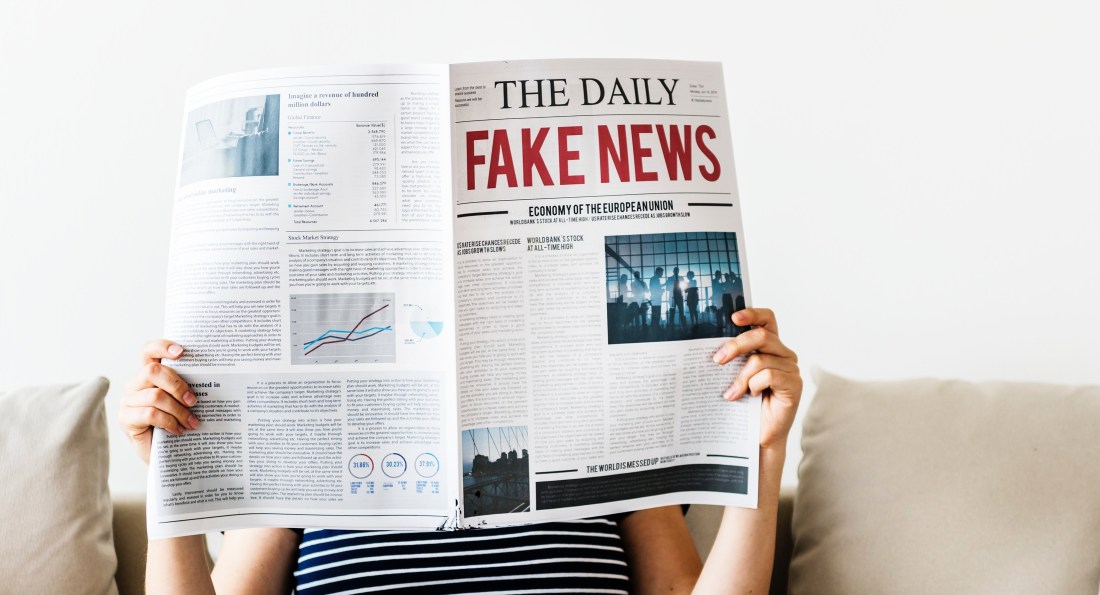
Fake News as a Digital Reality

As long as humanity has existed, so have lies. People lie to each other for a variety of reasons, but that is a completely different discussion. The phenomenon of “fake news” has come into the spotlight as digital media has risen to prominence and companies such as Facebook gain enormous power and influence in modern culture. Lawmakers and regular citizens have come to realize that Facebook is a platform notorious with misleading and downright false content, often intended to influence users. After the presidential election and others following, we have to accept that we are grossly undereducated and unprepared for understanding our Internet forums and what they are truly capable of. Fake news has tremendous power in today’s digitally oriented culture, and it is often more organized than we think.

This leaves us with the burning question: what can we do to combat this? I believe the better way to ask this is, “how can we better educate people to deal with this problem?” So many people are ignorant of fake content on the Internet simply because they don’t know how to recognize it. Think of your 70 year-old grandmother. She grew up where the main source of information came from large, traditional news outlets such as the New York Times or Washington Post. These were credible sources who more or less had a monopoly on mass distributed information. Today, she logs on to her Facebook and sees an endless stream of information that has not been vetted in the same way traditional mass media has in the past. Combating fake news is a two-step approach. First, we need to educate those who are already active in the digital landscape. There seem to be less institutional ways to do this effectively, so it is critical that those who understand fake news inform others of its dangers. If a friend shares something on Facebook or another social platform that is fake news, respectfully inform them of their wrongdoing and how they can recognize false information in the future. This can be done in the comments section, in a private message or in person. If we take it upon ourselves to kindly and respectfully educate our friends who may not understand fake news, one by one we can create a more digitally competent society.

I think where the real impact can be made in fake news education is in the next generation, those who are still in school and yet to enter digital media or are still novices. This can range from the earliest stages of education through college. Implementing digital competency courses into formal education means we can ensure the next generation of digital users will not make the same mistakes many of us have. Digital competency courses can and should be taught at young ages, perhaps even as young as fourth grade. Kids are getting their hands on social media and other online forums at younger and younger ages, so it is paramount that our education system prepare them for the challenges that come with digital citizenship. An introductory course early on is valuable, but it also would do students well to take an in-depth digital competency course in college. Many colleges, Creighton included, require students to take a large core of liberal arts classes in order to graduate. With the mission of this being a well-rounded, capable student, it would benefit everyone to include into this curriculum a digital literacy course. If millions of college students are required to learn the ins and outs of digital media and content distribution, they can enter the workforce and greater society with an understanding of fake news that will help society be better informed.

Fake news is a misunderstood, minimally combatted and destructive force that has already made real impact on our society’s decisions. While damage has already been done, it’s not too late to start educating the masses on its dangers and how to combat it. While I believe the education system has the most power to make change, it falls on all of us to be aware of fake news and not be afraid to teach each other to be better digital citizens.

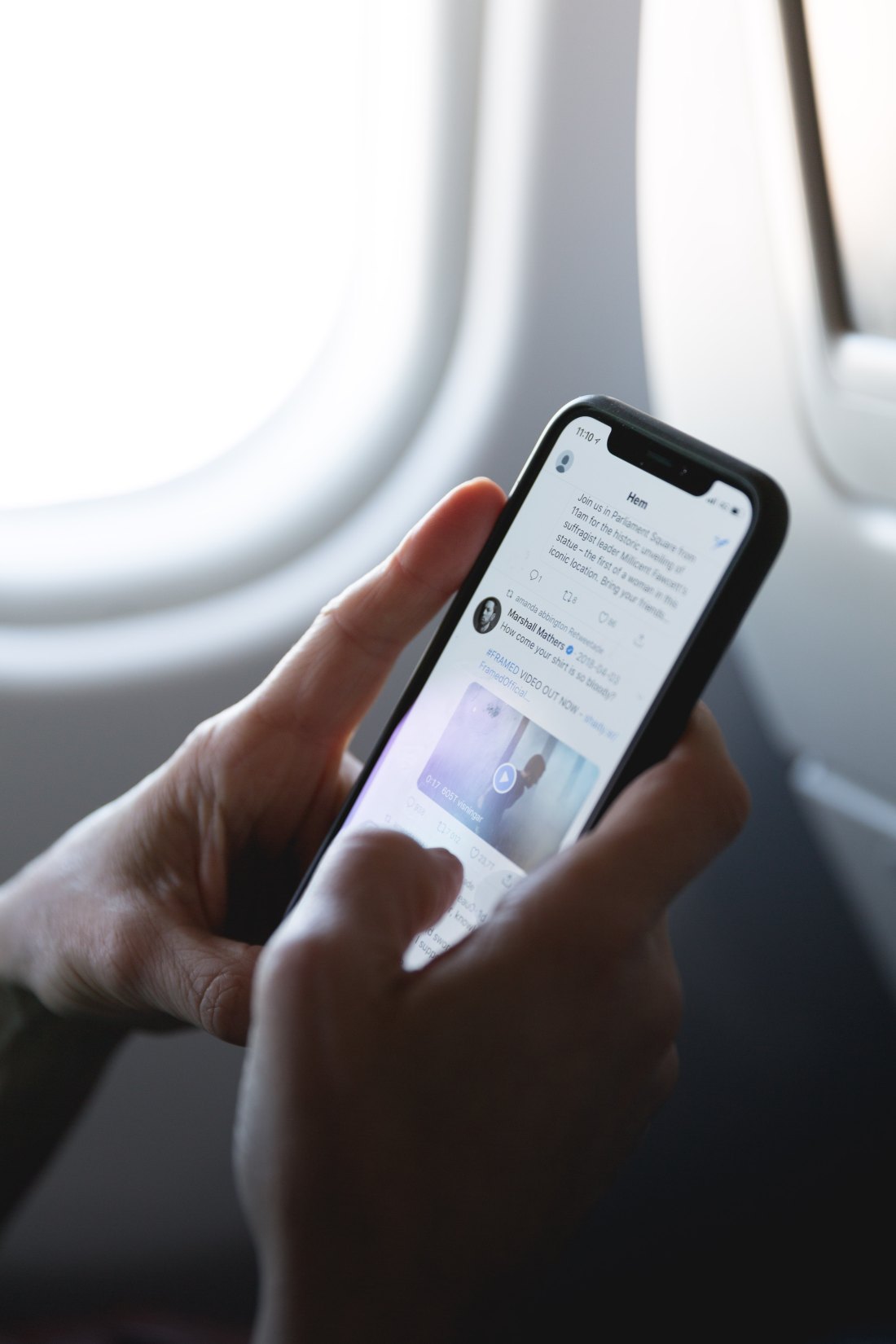
Photo from rawpixel (@rawpixel) on Unsplash.com. URL:

Adapting Digital Industries

In our modern “digital age,” it would seem that no industry is left unchanged by the wave of digital integration into every aspect of our lives. The behemoth fields of public relations and advertising are at the forefront of this digital innovation. The way consumers digitally communicate and interact is constantly changing, and since both disciplines are centered around communication, it is important that they be constantly following these ever-changing patterns.

Advertising faces a difficult challenge of continuing to get consumers’ attention in a digital landscape where it is easier and easier to ignore ads. With cable television going out of style and the use of ad-blockers increasing, advertisers must be more and more innovative to get their products in front of potential customers. Product placement is a great way to inject brands into popular content to create powerful associations. In class, a group found more than 10 placements in the music video for Lady Gaga’s hit song, “Telephone.” Proctor and Gamble bought an entire storyline on the hit ABC sitcom, “Black-ish.” Other unique forms of advertising have emerged as well. Native advertising allows vendors to place an article in a news site or paper while giving it the appearance of a regular article. Creighton has done this several times in the Omaha World-Herald as a way to engage the Omaha community. Other news sites like CNN will have a “From Our Sponsors” section with more native advertising articles. The form that I enjoy the most, but is the hardest to organically create, is viral video marketing. This is best illustrated with Blendtec’s Will it Blend? The YouTube program consists of hilarious videos where a silly scientists places all kinds of ridiculous things into a Blendtec blender, and has been viewed millions of times. While they are funny and enjoyable to watch, they are an extremely effective way to get Blendtec’s products in front of people.

Public relations, while less profit driven as a whole than advertising, is also responding to the new digital landscape. PR professionals have new ways of communicating with their constituents to make their message more effective and have a greater reach. The most obvious example of this is social media. During the PRSSA event Meet the Pros, I spoke with the Director of External Relations and Engagement, Jeremy Maskel. He explained that during a school lockdown, he was able to provide parents and other interested parties live information through the school’s social media accounts. While he likely used some sort of organized, after-the-fact communication as well, social media allowed him to inform people immediately as events unfolded. Under the umbrella of integrated marketing communications, public relations experts can use viral video marketing as well. WestJet’s “WestJet Christmas Miracle: Real Time Giving” video, which received over 48 million views on YouTube, served as both an advertisement and a PR effort. The message of the commercial was used to show WestJet’s charitable spirit and the energy of their employees, which isn’t in and of itself a product advertisement, but serves to give the consumer a better view of the company.

Public relations and advertising have grown more and more overlapping, and need to become more and more digital as the rest of our world and our consumers have. Both industries need to be constantly innovating in order to keep up with the lightning pace of consumer’s digital habits and needs, and it’s funny to imagine what will be the new norm in 15, 10, or even five years.

Image from rawpixel (@rawpixel) on unsplash.com URL: https://unsplash.com/photos/-xJAb5-NJSQ

Everything is Permanent

In today’s world of digital interactions, there still somehow exists the illusion to some people that “deleting” something on the Internet actually deletes it. Alfred Hermida explains in “Tell Everyone” how social media and digital technology do not necessarily change the nature of our interactions, just the medium, and that these interactions are now made permanent record. We are able to exchange information and ideas to more people than we every have been able to, but the caveat is that every interaction online is meticulously archived and recorded. A person could tweet something controversial, then push the delete button a few minutes later thinking they are in the clear. In reality, that tweet exists in some form on the Internet for the rest of eternity. A more accurate name for “delete” would be “remove from timeline.” The #1 rule we teach our children for the Internet should be “just because you can’t see something doesn’t mean it’s not there.”

The Internet’s nature of permanence both gives and takes. As users, we must be extremely intentional about every form of content we place on the Internet. Every time I tweet, send an email or post on Facebook, I need to think of the repercussions. Is this content appropriate? Is it something I don’t mind others, including strangers, seeing? In 20 years will I look back and be embarrassed by this? There have been plenty of times where as a prank, friends have found my tweets from my early years on Twitter (I confess doing the same to them). There was nothing inappropriate, but definitely material that made me cringe for its awkwardness. Even though I could delete that tweet so they could not see it, that means digging through hundreds or thousands of tweets to find it. It does not take an experienced hacker to dig through and retrieve our “deleted” Internet content. More often than not, it is simply lying on our feeds, buried under years of newer posts. Take Milwaukee Brewers relief pitcher Josh Hader, whose homophobic and racist tweets from when he was 17 resurfaced on Twitter during the MLB All Star Game.

The permanence of any and all Internet interactions is not completely negative. It encourages us to put our best foot forward, and has a way of punishing the foolish or bigoted. Reading about Josh Hader’s Twitter incident, I in no way felt bad for him. While I know every 17-year-old is far from smart, he tweeted things like “KKK” and “I hate gay people.” At that age, individuals should know better than to put such brash language into circulation, permanent or not, on the Internet or in spoken word. Another way Internet permanence benefits us is by holding public figures accountable. Whenever a politician tweets, their views are on the record for the public to see. In a debate, a senator could say, “I believe in abortion rights,” and the moderator could respond, “but just nine months ago you tweeted that you were firmly pro-life.” The same goes for celebrities. When individuals monetize their fame and public persona on the Internet, the consumer has the ability and responsibility to use digital channels to see if they approve of that person’s conduct before partaking in their product. Take for example James Gunn, director of the extremely popular Guardians of the Galaxy movie franchise. Recently, he was slated to begin shooting Guardians of the Galaxy Vol. 3, when some of his old tweets surfaced from 2008 and 2009 joking about rape and pedophilia and Disney cut ties with him. While there is debate over this particular incident, it is a perfect illustration of when Internet permanence holds public figures accountable to their words, no matter the time. On one hand, as consumers of social media, we must be careful with our words and understand their impact and permanence. In return, we are able to see people’s thoughts going back as long as their Internet history, and can make judgements on public figures and peers with information we may not have had before the digital age.

Image from Marten Bjork (@martenbjork) on unsplash.com. Link: https://unsplash.com/photos/FVtG38Cjc_k