
The Online Generation

People my age and more so children a few years younger than me have grown up in the digital world, where most of the modern technology that is so influential in today’s world (smartphones, tablets, etc) already existed. David Rushkoff and Generation Like take us through the new ways we interact with our world, and the effect it has on young and old, focusing on the younger generations whose lives are the most online. What resonated with me most is how our youth share and interact in a world that is increasingly digitized, yet there is little being done to monitor and educate them about what this actually means.

Children and young adults are spending more and more time and putting more and more personal information online without stepping back to reflect on their actions, because how should a 13-year-old be able to self-discern proper sharing on the Internet? The older generations created “Generation Like” by creating the vast Internet and giving it to all with no guidelines or restrictions. 8th grader Daniela Diaz is a great example of this in the video. She posts singing videos, vlogs and pictures to the web to enjoy the attention they receive. While nothing is wrong with posting a few videos to YouTube, it seems Daniela does not necessarily understand the gravity of what she is doing. And how could she? 8th graders are not expected to have a great amount of self-acquired digital literacy. The most troubling fact about this video is not that her parents are unaware of her online presence, rather it’s that they support and encourage it. Her mother boasts that she takes all of Daniela’s photos and was the one to originally suggest that she post videos to YouTube. Her mother’s behavior is a disturbing reflection of a greater reality: Parents don’t understand the consequences of a digital world, so how are their kids supposed to know? Daniela’s mother explains that when her daughter posts a picture in a swimsuit or bikini, she gets more likes than other pictures. Mind you, at the time of Generation Like, she is not old enough to drive a car. She literally has data that her young daughter exposing herself receives more attention, yet she does not seem concerned by it. Understandably so, the gravity of Daniela’s actions on the Internet is lost on her, as she gets caught up in the fun of likes and comments from “fans.” Parents and all adults need to better understand the permanence of the Internet and its other attributes in order to properly educate their children who nowadays are surrounded by technology from the day they are born. Daniela’s mother doesn’t have to ban her daughter from posting, but before she begins, she should explain to her the Internet’s permanence and other potential consequences. Following the release of the episode, Daniela’s YouTube channel saw a surge of hateful comments.

Another aspect of the Internet discussed in Generation Like and especially affecting children is social currency moving online. Now, young adults’ popularity is often determined by how many likes they get, or the perception of their online profiles. Rushkoff sits down at a table of teenagers helping their friend revamp his Facebook profile and interviews a girl who works to be the most recognized Hunger Games fan online. Rushkoff shows how much time teens put into their Internet presence and content usually without pay, but as an expert tells him, “it doesn’t matter, because they’re famous.” It interests me how much time we spend online not for a tangible reward, but for social acceptance and prestige.

Generation Like examines everyday online happenings for our kids while going deeper to learn more about how today’s youth spend their time online. This video unsettled me, realizing just how much unrestricted and uneducated access young adults have to the Internet while really knowing nothing about it. Our schools need more web competency courses, and our parents need to educate themselves much more before ever putting a device in their child’s hands.
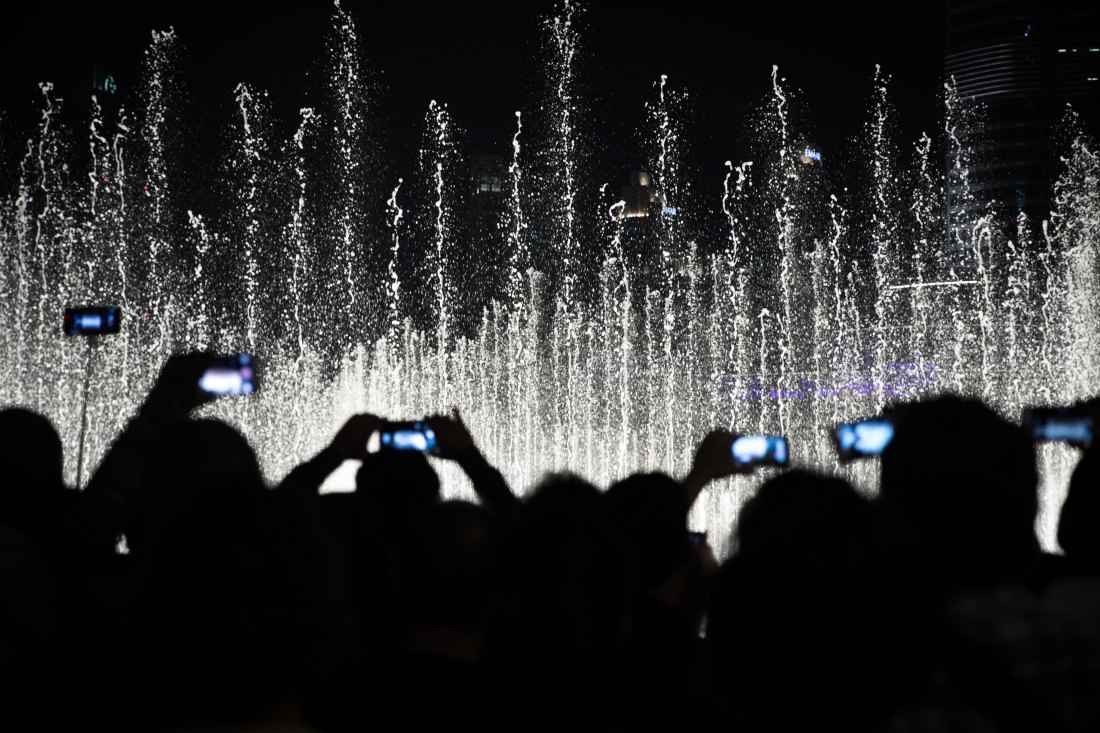
Photo by Tim Gouw (@punttim) on Unsplash.com. URL: https://unsplash.com/photos/LmYcS4nwj8w

Our Attention as a Commodity

The nature of our humanity and society is that of constant improvement. In all of history, everything that has been created has been tweaked and perfected throughout the years, it’s in our nature. Technology and digital media are no exception, but today it begs the question, is technology doing its job too well? The goal of Twitter, the internet and other digital technologies have irreversibly woven themselves into modern society, and we are left to grapple with it. Douglas Rushkoff brings up the idea of FOMO, or “fear of missing out,” and how it is further aggravated by digital media. Rushkoff uses the example of the woman who spends a night on the town in New York City on her phone, sharing pictures and finding out where her friends are. On one side, we are pressured to constantly post updates on all the cool stuff we are doing, on the other, we scroll through on the receiving end of these updates, feeling like we in turn are not doing enough ourselves. It’s a vicious cycle.

Digital media perpetrates this cycle, where it sometimes can feel like people are more focused on making it appear online like they are having a good time, rather than actually enjoying the moment itself. Rushkoff uses the example of “Gina” in his book. Gina is a popular high school student who spends a Friday night on the town in New York City: “She’s at a club on the Upper East Side, but she seems oblivious to the boys and the music. Instead of engaging with those around her, she’s scrolling through text messages on her phone, from friends at other parties, bars, and clubs throughout New York.” She then moves to another party, where “…she turns her phone around, activates the camera, and proceeds to take pictures of herself and her friends – instantly uploading them to her Facebook page for the world to see.” This chapter resonated with me to an uncomfortable degree. I am all too familiar with this in college, out and about and everywhere I see people on their phones and taking pictures. Granted, I love getting pictures and there’s nothing harmless about it if done right. However, there are certain people that as soon as something funny or entertaining happens, they whip out their phone to shoot or record it to send around social media. One night sophomore year my roommate and I were getting ready for bed, when our friend came by. My roommate said something funny and she quickly took out her phone, flash and all, and began filming him, “what did you just say?” While I can definitely be a phone addict, I think I do a decent job of not trying to capture everything digitally and rather just enjoy it physically.

For free services like Facebook and Twitter, they wage a constant war for our attention in order to realize profits. They are constantly working to get us to check our phone one more time. It is not just in the casual world of entertainment. Our jobs today feel more and more connected, even beyond the office. I am currently an intern in Creighton’s marketing department, and I receive dozens of emails a day from our project management system, even when I am not in the office or when the projects no longer relate to me. While I could change the email settings, that would mean me possibly missing notification for projects I am involved in. I have not even fully entered the workforce yet, and am already feeling work’s technological reach beyond the workspace. My mom comes home from work and sits down at her computer to answer emails for several hours after she has physically left the office. Increased technology in the workplace has made it more and more difficult for us to keep work within office hours.

In our world of ever-increasing connectivity, it becomes more and more difficult to unplug in numerous facets of life. When we hit the town to relax after a stressful week, we check our phones to see what our friends are up to elsewhere. When we come home from work, we are still inundated with emails and projects that can be done online. Technology advances faster than we can determine how to best regulate it, and we as a society are still grappling with how to best balance our technology intake with the rest our lives, lest they be overtaken completely.

Photo by YIFEI CHEN (@imchenyf) on unsplash.com. Link: https://unsplash.com/photos/HGXfNxxfU-Q